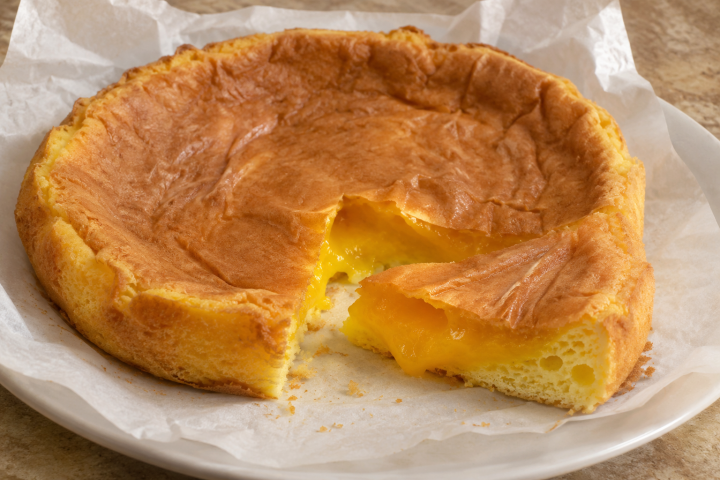
Pão-de-Ló de Alfeizerão (Alfeizerão, Alcobaça, Portugal)
A thin golden crust and a light rim of sponge surround the soft, creamy centre of this round cake from Portugal’s Oeste region.
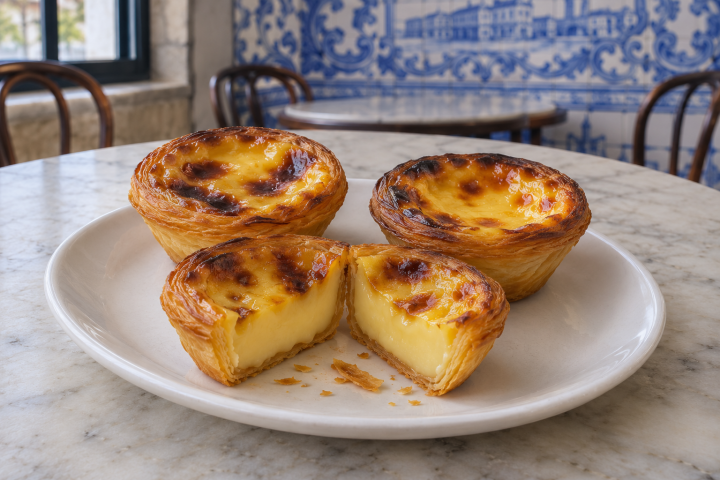
Pastéis de Belém (Belém, Lisbon, Portugal)
These custard tarts, baked beside Lisbon’s Jerónimos Monastery since 1837, have a crisp shell of layered pastry and a soft egg custard flecked with brown from the oven.
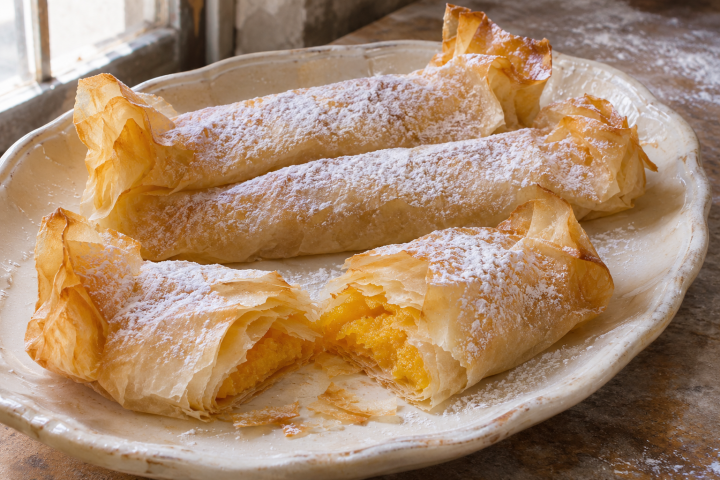
Pastéis de Tentúgal (Tentúgal, Montemor-o-Velho, Portugal)
Hand-stretched sheets of dough form a crisp shell around a soft filling of eggs and sugar in this convent pastry from central Portugal.
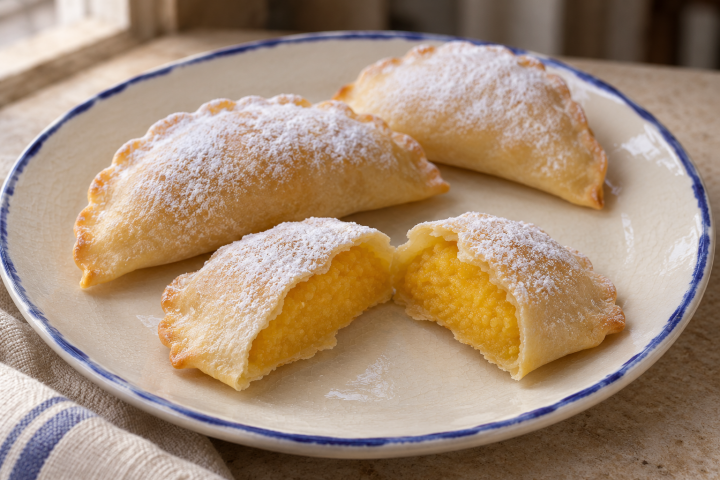
Pastéis de Santa Clara (Coimbra, Portugal)
Half-moon pastries from Coimbra, made by folding a thin butter dough around a filling of egg yolks, sugar and ground almonds, then baking until golden.
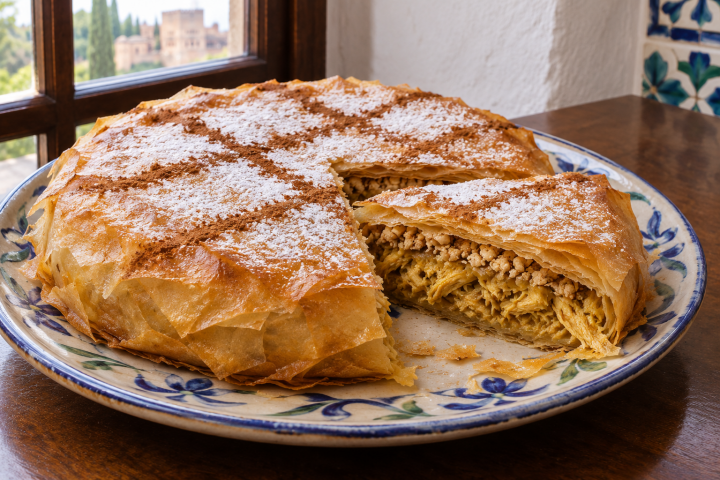
Pastela Moruna / Pastilla (Morocco and Granada, Andalusia, Spain)
A Moroccan festive pie, also served in Granada, whose classic poultry version encloses spiced pigeon or chicken, eggs and sweetened almonds in crisp layers of thin pastry.
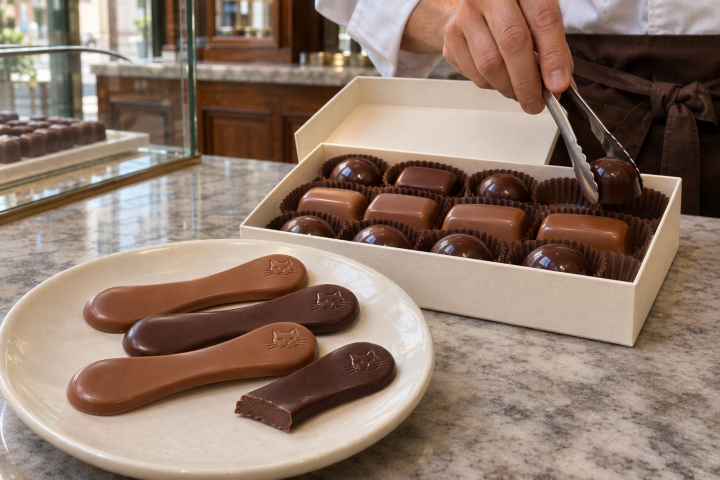
Pastelaria Arcádia / Arcádia Casa do Chocolate (Porto, Portugal)
A family-run confectioner founded in Porto in 1933, known for its tongue-shaped chocolates, hand-decorated liqueur sweets and Easter almonds.
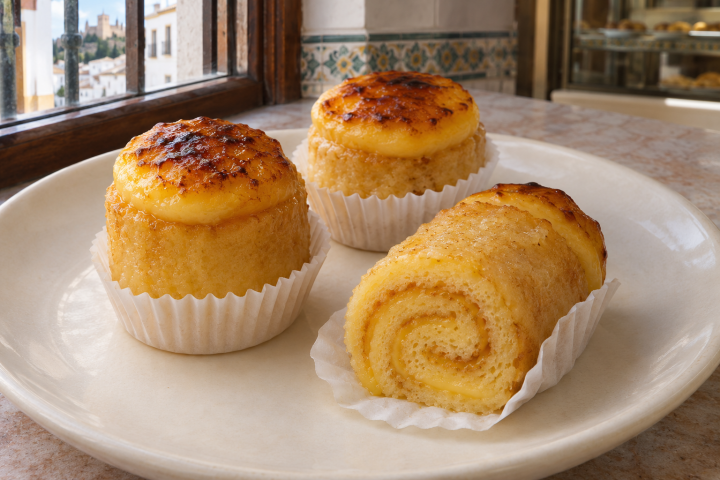
Piononos de Santa Fe / Piononos de Granada (Santa Fe, Granada, Andalusia, Spain)
A small Andalusian pastry made from a syrup-soaked sponge rolled around egg cream, set upright in a paper case and topped with a cap of caramelised cream.
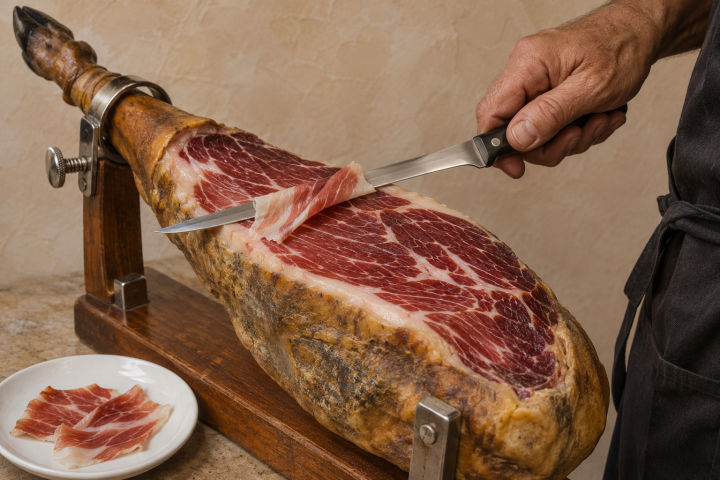
Presunto de Porco Preto / Jamón Ibérico (Alentejo, Portugal, and Spain)
A dry-cured ham made from the hind leg of a pig of Iberian ancestry, with acorn-finished varieties traditionally associated with the oak pastures of southern Portugal and western Spain.
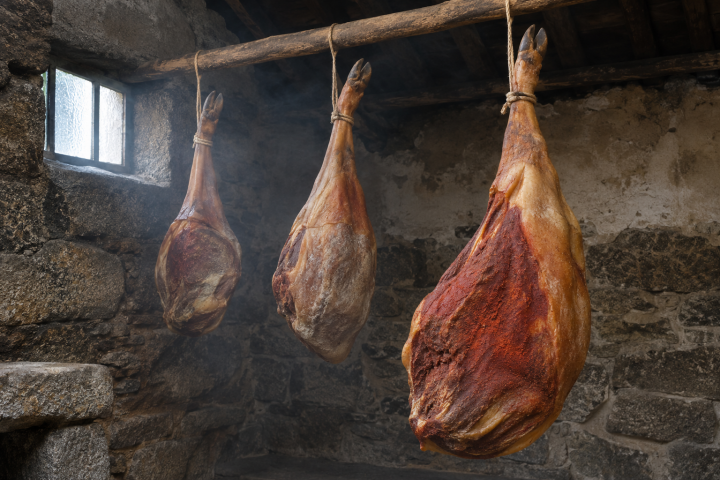
Presunto de Vinhais / Presunto Bísaro de Vinhais (Trás-os-Montes, Portugal)
Presunto de Vinhais is a dry-cured ham from north-eastern Portugal, made from the hind leg of a Bísaro pig and lightly smoked over oak or chestnut wood.
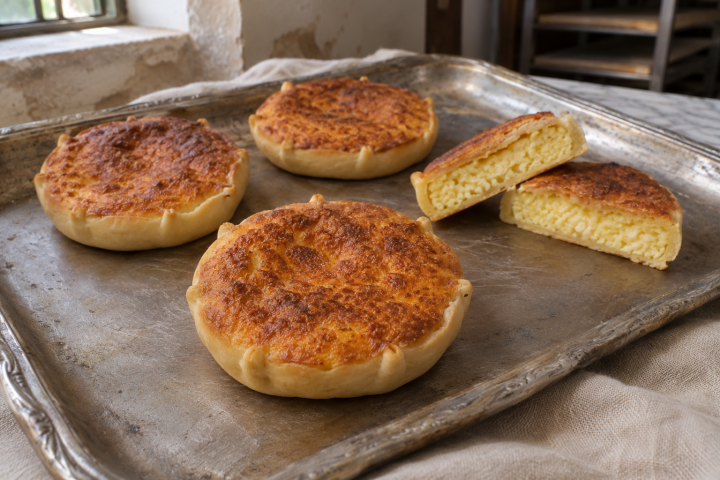
Queijadas de Pereira (Pereira, Montemor-o-Velho, Portugal)
Queijadas de Pereira are small, open tarts from Portugal’s lower Mondego valley, traditionally baked in a wood-fired oven with seven hand-pinched folds around a sweet filling of fresh ewe’s milk cheese.
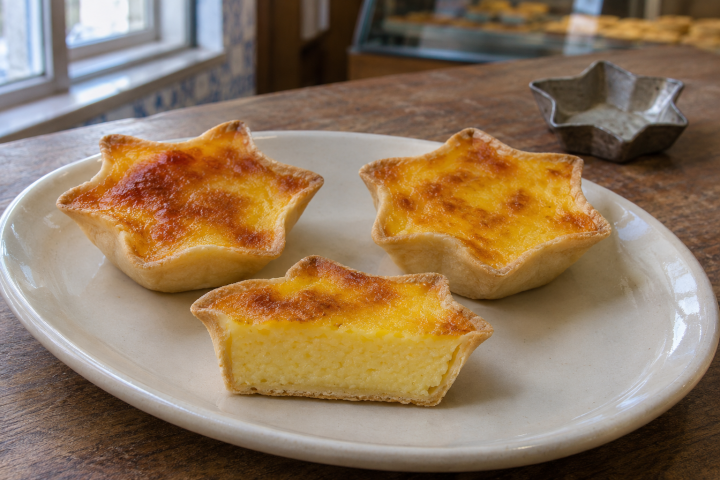
Queijadas de Tentúgal (Tentúgal, Montemor-o-Velho, Portugal)
Queijadas de Tentúgal are small, star-shaped Portuguese tarts with a crisp pastry shell and a sweet filling of fresh cheese and egg yolks, associated with the Carmelite baking tradition of the lower Mondego valley.
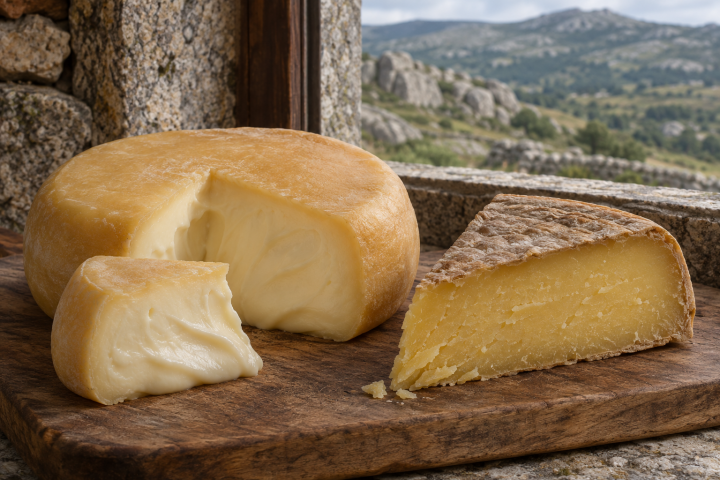
Queijo Serra da Estrela (Serra da Estrela, Portugal)
A traditional dry-cured ham from north-eastern Portugal, made from the hind leg of a Bísaro pig and lightly smoked over oak or chestnut wood.